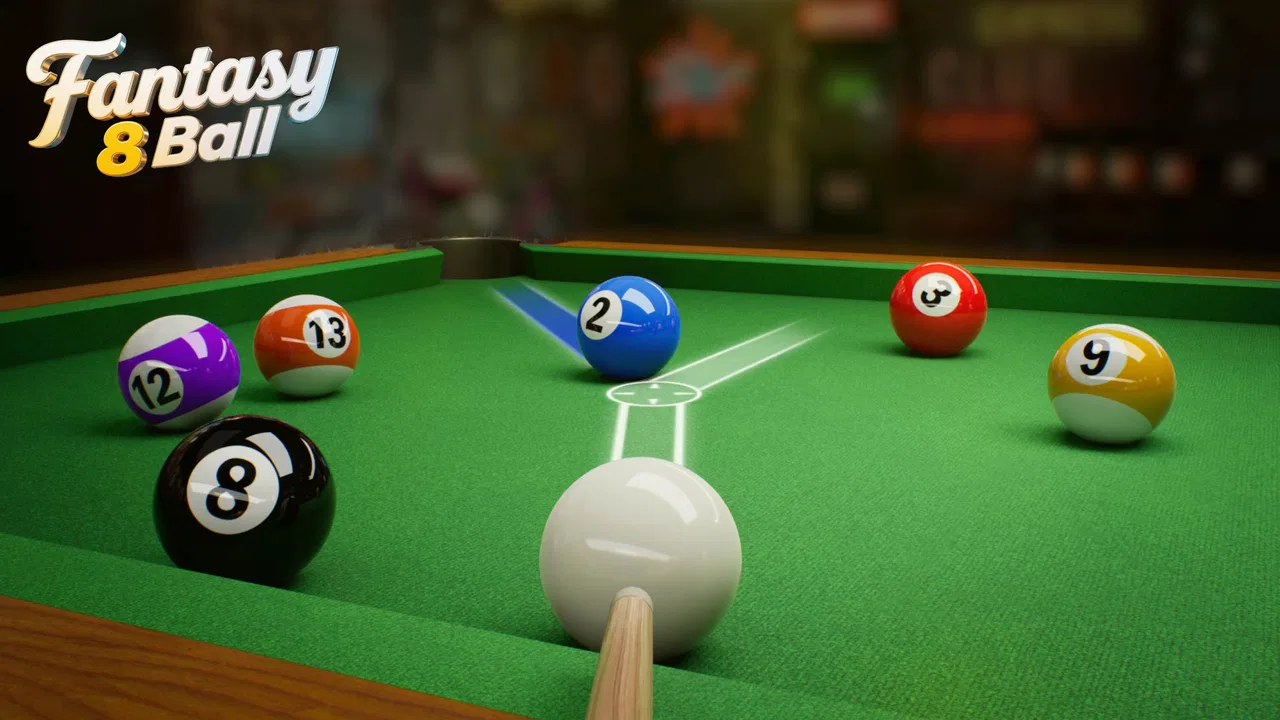
Fantasy 8 Ball: Pool Billiards
- 4.7
- Rating
- 500.00K
- Installs
- Free
- Price

 Analysis by App-foxy
I approached Fantasy 8 Ball: Pool Billiards as the kind of game I could pick up for a short break, play without preparation, and understand quickly. That first impression is accurate: it is a free sports game from ARK GAME LIMITED built around digital pool, with a fantasy-styled presentation rather than the plain look of a traditional billiards simulator. The basic appeal is easy to grasp—line up a shot, control the cue, and try to leave the table in a better position than you found it.
What makes the game worth considering is not simply that it puts an eight-ball table on a phone. Plenty of mobile pool games do that. The more interesting question is whether the controls feel approachable while still giving you enough control to make careful shots. In my experience, this is best understood as a relaxed entry point for people who want the rhythm of pool without committing to a large, complicated sports package.
The game is available at no charge and is rated for Everyone, which makes it an easy recommendation for casual players looking for a low-pressure sports title. It has reached over 500 thousand installs and holds a 4.7 average from roughly 4.7 thousand ratings, so there is clear interest in its particular mix of pool and fantasy visuals. I would still treat those numbers as a reason to try it, not as proof that it will suit every player.
You May Also Like

 Blood Strike: 2.5 Anniversary
Blood Strike’s Loadouts Turn Every Drop Into a Tactical Gamble
A close look at Blood Strike’s custom loadouts: how fast access to signature weapons reshapes its battle royale rhythm, rewards preparation, and narrows the gap between fights.

 Pandora - Music & Podcasts
Pandora’s Music Is Easy to Start, but Harder to Recover
Pandora’s strength is its low-effort path from a seed to a station. Its weak spot is how much confidence it asks you to place in connection, setup, and quiet recovery.

 8 Ball Pool
 Is Built on Rivalries, Rematches, and Routine
A close look at the rivalries, rematches, shared routines, and unanswered safety questions that turn a quick pool match into a persistent mobile community.

 Samsung Music
’s Quiet Strength Is Playing What You Already Own
Its reach comes less from spectacle than from dependable access to a personal library. That simplicity is both the app’s strongest retention engine and its ceiling.

 AccuWeather: Weather Radar
AccuWeather Review: A Quick, Clear Forecast for Everyday Decisions
For everyday plans, the best forecast is the one you can understand quickly. AccuWeather makes rain timing, radar, and local conditions easy to act on, with a few trade-offs.

 Hill Climb Racing
Why Hill Climb Racing Still Turns Crashes Into One More Run
A tiny car, a bumpy hill and one more upgrade: Hill Climb Racing keeps resurfacing because its simple chaos makes every near-miss feel personal.
More From Our News Desk



Getting from the first launch to a confident shot
I’d treat the first few turns as a chance to learn one control at a time, rather than trying to master every shot at once. Once you can predict how a small change in aim or power affects the cue ball, it becomes easier to choose shots deliberately and decide whether this relaxed style of mobile pool is the right fit for you.
What the first session feels like
The first thing I would tell a new player is not to rush toward difficult shots. A mobile pool game rewards small adjustments, and the screen can make a cue angle look more obvious than it really is. I spent my early attempts learning how the aiming line responds to touch, how much the cue direction changes with a short movement, and how the power control behaves when I try to make a gentle shot instead of a dramatic break.
That learning period matters because pool is often lost through positioning rather than through a spectacular mistake. Potting one ball is satisfying, but leaving the cue ball in an awkward place can make the next shot much harder. Fantasy 8 Ball: Pool Billiards is more enjoyable when I treat each turn as two decisions: which ball I want to hit, and where I want the cue ball to finish afterward.
The fantasy presentation gives the game a lighter personality than a strict billiards simulation. I found that useful during short sessions because a missed shot feels like part of the game’s playful atmosphere rather than a technical failure. Players who want a serious recreation of tournament pool may prefer a more realistic alternative, but anyone who likes a colorful sports game should feel comfortable here.
How I would handle the first setup
After installing, I recommend starting with the simplest available play option rather than immediately experimenting with every menu or purchase prompt. The goal of the first session should be to learn the table, not to make a long-term decision about upgrades or spending. Because the game is free, you can judge the controls before putting any money into the experience.
The current version is 0.7.1, and it supports devices running Android 7.0 or later. That broad operating-system requirement makes it accessible to many older Android phones, although the actual comfort of play will still depend on screen size, touch response, and general device performance. On a smaller display, I would use slower gestures and pay closer attention to the aiming guide instead of trying to make quick corrections.
There are in-app purchases ranging from $0.99 to $99.99 per item. That is important for first-time users, especially anyone handing a phone to a child. The Everyone rating describes the content category, but it does not remove the need for sensible purchase controls on the device. My practical advice is to play several sessions first and decide whether the free experience already gives you what you want.
I also suggest beginning with a short, deliberate routine: take one easy shot, observe the result, then make a second attempt while changing only the power. This isolates the most important control instead of mixing aim, strength, and speed all at once. It is a small habit, but it makes the learning curve feel much less mysterious.
The first meaningful success
For me, the first real success in a pool game is not simply sinking a ball. It is sinking a ball while leaving a sensible next option. To reach that point, choose a target with a generous pocket angle, aim with small movements, and use less power than your first instinct suggests. A soft shot is easier to evaluate because the cue ball usually stays closer to the area you expected.
When the aiming line looks nearly correct, avoid repeatedly dragging back and forth. Each extra adjustment can introduce a new error. I prefer to make one broad alignment, then use a small final correction. This is especially helpful on a phone, where a tiny finger movement can change the angle more than expected.
Power deserves separate attention. A hard strike may look exciting, but it can scatter the table and remove the easy follow-up you were hoping to create. I get better results by using firm power only when I need to travel a longer distance or open up a blocked position. For ordinary pots, a controlled stroke is usually the more useful choice.
Once you pocket a ball, pause before selecting the next target. Look at the cue ball’s new location and choose the shot that keeps the table manageable. This is the first point where the game becomes more than a reflex exercise. Even in a relaxed mobile version, planning one shot ahead changes the way I play and gives a win more meaning.
Where new players commonly get confused
The most common confusion is assuming that the aiming guide tells you everything that will happen. It can help with direction, but the final result still depends on the strength of the stroke and the angle at which the cue ball meets the object ball. If a shot looks aligned yet misses, I would first reduce the power and check the contact angle before blaming the control system.
Another easy mistake is focusing only on the ball you want to pocket. Pool punishes that narrow view. A successful pot can still leave you with no useful next shot, while a slightly less obvious target may open the table. I began to enjoy the game more when I stopped treating every turn as a single challenge and started viewing the table as a sequence.
Players may also wonder why a gentle shot sometimes feels more difficult than a powerful one. The answer is that low power leaves less room for a dramatic correction after contact. That is not necessarily a flaw; it is part of the trade-off. Soft shots offer better control, but they demand more accurate alignment. Strong shots are forgiving about distance while being much less forgiving about position.
The fantasy styling can create a different kind of uncertainty. If you usually play straightforward pool simulators, you may expect every visual element to communicate technical information. Here, some of the appeal comes from atmosphere, so the game is better suited to players who enjoy presentation alongside the sport. If your priority is detailed competitive realism, a conventional billiards simulator may be the better choice.
How I would use it in an ordinary day
Imagine having ten minutes before leaving for an appointment. A full console-style sports game would be inconvenient, but a few pool turns are easy to fit into that gap. I would open the game, take a moment to settle my aim, and focus on completing a small run of sensible shots rather than chasing a perfect performance. That makes the session feel complete even if I do not play for long.
It also works as a low-pressure way to introduce someone to digital pool. A first-time player can learn the relationship between angle and power without needing to understand a large roster, complicated team system, or long campaign. I would sit beside a new player for the first few turns and explain one idea at a time: aim first, use moderate power, then think about the cue ball.
For experienced pool players, the value is different. You may enjoy the convenience of practicing basic shot selection on a phone, but you should not expect the same feel as a physical table. Touch controls remove the tactile feedback of a real cue, and a mobile screen cannot reproduce the full sense of distance and spin that serious players may want. I see this as a casual companion rather than a replacement for playing pool in person.
What to do after the first win
After a first successful game, I would not immediately change everything about the way I play. Instead, I would repeat the same approach and identify which part caused the most trouble. If aiming felt comfortable but the cue ball traveled too far, reduce power. If the power felt right but the angle was inconsistent, slow down the final alignment. Changing one variable at a time turns frustration into useful feedback.
A good next step is to create a personal rule for shot selection. Mine is to prefer the ball that gives me the clearest follow-up, even when another ball appears easier. This is not always the correct choice, but it encourages better table awareness. It also prevents the game from becoming a string of isolated lucky pots.
I would also keep an eye on how long each session remains enjoyable. The game is free, but free access does not mean every player must continue indefinitely or buy extras. If you like the core controls and the fantasy look, optional spending may feel worthwhile to you; if you only want occasional pool, the no-cost starting point may be enough. The purchase range means it is sensible to set a limit before browsing any paid items.
Who will enjoy it most
I think this game is strongest for newcomers to mobile pool, casual sports players, and people who prefer a more playful visual style. It gives those players a clear activity with a satisfying short-session loop: aim, strike, react, and try to improve the next decision. The Everyone rating also makes it a reasonable family-friendly option in terms of content, while device-level purchase protections remain worth using.
It is less convincing for someone seeking a highly technical billiards tool. If you want detailed training for real-world competition, exact physical simulation, or the feel of a full-size table, I would choose a dedicated simulator or practice on an actual table instead. The fantasy angle is part of this game’s identity, so players who want a strictly traditional presentation may find it distracting rather than appealing.
My other reservation is that the game’s free-to-play structure requires awareness. The in-app purchase range is wide, and a player who becomes invested may be tempted to spend more than intended. I would not let that stop me from trying the game, but I would approach it with a clear budget and judge paid options by whether they genuinely improve my enjoyment rather than by their promise of faster progress.
My recommendation after spending time with it
Fantasy 8 Ball: Pool Billiards succeeds when I treat it as an approachable pocket-sized pool game with a fantasy personality. Its best quality is the way a simple shot can become a small planning exercise: control the angle, choose the right strength, and leave yourself a useful position. That combination gives casual play more depth than the first few turns suggest.
I would recommend installing it if you want free, easy-to-start sports entertainment and enjoy learning through short attempts. Begin slowly, use moderate power, and judge your success by the position of the cue ball as much as by the ball entering the pocket. Those habits make the transition from first launch to confident play far smoother.
My final view is positive but specific. This is not the choice I would make for strict competitive realism, and I would stay mindful of the optional purchases. For a first-time player who wants a friendly introduction to mobile billiards, however, it offers a comfortable place to start. The smartest way to enjoy it is to master control before chasing extras.
FAQs for Fantasy 8 Ball: Pool Billiards
01What features does Fantasy 8 Ball: Pool Billiards offer?
Fantasy 8 Ball: Pool Billiards offers a variety of game modes, including single-player challenges, multiplayer matches, and tournaments. Players can customize their cues and tables, enjoy realistic physics, and participate in special events. The game also includes a practice mode to hone your skills before taking on tougher opponents.
02Is Fantasy 8 Ball: Pool Billiards free to play?
Yes, Fantasy 8 Ball: Pool Billiards is free to download and play. However, it offers in-app purchases for additional cues, tables, and energy refills. Players can enhance their experience by purchasing these items, although they are not necessary to enjoy the core gameplay.
03Does Fantasy 8 Ball: Pool Billiards require an internet connection?
While you can play Fantasy 8 Ball: Pool Billiards offline in single-player mode, an internet connection is required for multiplayer matches, tournaments, and to access certain features. Playing online also allows you to compete with friends and track your progress on global leaderboards.
04Are there any age restrictions for playing Fantasy 8 Ball: Pool Billiards?
Fantasy 8 Ball: Pool Billiards is generally suitable for players of all ages. However, due to online interactions and in-app purchases, it's recommended for players aged 13 and up. Parents should monitor younger players to ensure they manage in-app purchases appropriately.
05How can I improve my skills in Fantasy 8 Ball: Pool Billiards?
Improving in Fantasy 8 Ball: Pool Billiards involves practicing regularly in the game’s practice mode and exploring various strategies. Watching tutorials and gameplay videos can also provide insights into advanced techniques. Participating in tournaments and playing against skilled opponents will further enhance your skills.
Pros
- Realistic physics enhance gameplay.
- Variety of challenging levels.
- Multiplayer mode available.
- Customizable cues and tables.
- Intuitive controls for easy play.
Cons
- Ads can be quite intrusive.
- Requires constant internet connection.
- Limited free features.
- Occasional lag in multiplayer.
- In-app purchases can be costly.

Fantasy 8 Ball: Pool Billiards
Gallery